
Automated DNA and RNA Synthesizer: Revolutionizing Genetic Research
Explore how Automated DNA and RNA Synthesizers revolutionize genetic research with faster, accurate nucleic acid synthesis for medicine, diagnostics, and bio...
Introduction
The world of genetic research and biotechnology is evolving at a breakneck pace, fueled by cutting-edge tools and technologies. One such innovation making waves is the Automated DNA and RNA Synthesizer, a game-changer that is transforming how scientists synthesize nucleic acids with speed, precision, and scalability.
Understanding this technology is crucial for businesses, researchers, and healthcare professionals aiming to stay ahead in genomics, personalized medicine, and synthetic biology. In this article, we'll explore the fundamentals of automated DNA and RNA synthesizers, their practical applications, market trends, benefits, challenges, and future outlook.
Technology Overview: What is an Automated DNA and RNA Synthesizer?
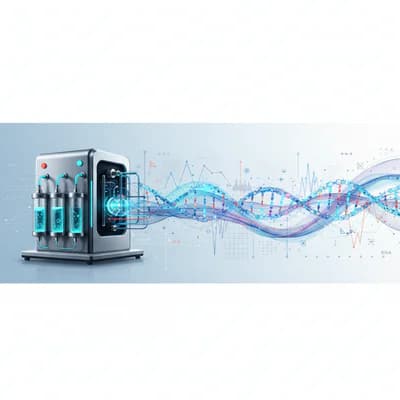
At its core, an Automated DNA and RNA Synthesizer is a sophisticated instrument designed to build custom sequences of nucleotides—the building blocks of DNA and RNA—via a highly controlled, stepwise chemical process. This automation replaces manual synthesis methods, drastically increasing throughput and consistency.
The technology primarily relies on the phosphoramidite method, a chemical technique that adds nucleotides one by one to a growing chain. Key components include:
- Reagent delivery system: Precisely dispenses chemical reagents required for nucleotide coupling.
- Reaction chamber: Where nucleotide elongation occurs.
- Control software: Manages synthesis cycles and quality checks.
- Purification modules: Optional systems for post-synthesis cleanup.
By automating these steps, these synthesizers enable rapid production of oligonucleotides—short DNA or RNA fragments—essential for research, diagnostics, and therapeutics.
Industry Applications & Use Cases
The versatility of Automated DNA and RNA Synthesizers has unlocked numerous real-world applications across various sectors:
- Biomedical Research: Synthesizers produce probes, primers, and gene fragments for PCR, gene editing, and sequencing.
- Pharmaceutical Development: Custom RNA molecules accelerate RNA-based drug discovery, including mRNA vaccines as seen during the COVID-19 pandemic.
- Diagnostics: Synthetic DNA/RNA sequences improve molecular diagnostic tests for infectious diseases and genetic disorders.
- Synthetic Biology: Enables the creation of artificial genes and pathways to engineer microorganisms for biofuel, agriculture, and biomanufacturing.
- Academic Institutions: Facilitates high-throughput studies in genomics and transcriptomics.
For instance, companies like Twist Bioscience leverage automated synthesizers to manufacture thousands of DNA fragments daily, fueling innovations in personalized medicine. Similarly, research labs utilize these systems to rapidly prototype CRISPR guide RNAs, accelerating gene-editing experiments.
Market Trends & Growth Drivers
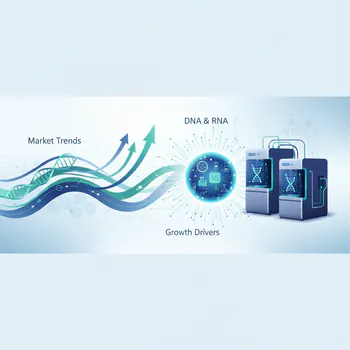
The global market for Automated DNA and RNA Synthesizers is witnessing robust growth, driven by rising demand for genetic reagents and precision medicine. According to recent industry reports, the oligonucleotide synthesis market is projected to grow at a compound annual growth rate (CAGR) exceeding 12% over the next five years.
Several factors contribute to this positive trajectory:
- Increasing adoption of genomics technologies in research and clinical settings.
- Expanding applications of synthetic biology in diverse industries.
- Growth in RNA therapeutics, particularly mRNA vaccines and gene therapies.
- Advancements in automation and miniaturization, reducing costs and turnaround times.
- Government and private funding for genetic research programs worldwide.
Moreover, emerging markets in Asia-Pacific are investing heavily in biotech infrastructure, further boosting demand for automated synthesis technologies.
Market Trends & Growth Drivers
Benefits & Advantages of Automated DNA and RNA Synthesizers
Businesses and researchers stand to gain significantly from integrating Automated DNA and RNA Synthesizers into their workflows. Key benefits include:
- Enhanced Speed and Throughput: Automation enables simultaneous synthesis of multiple sequences, reducing delivery times from weeks to days or hours.
- Improved Accuracy and Consistency: Computer-controlled cycles minimize human error, ensuring high-quality oligonucleotides.
- Scalability: Systems can be scaled to meet demands ranging from small-scale research to industrial manufacturing.
- Cost Efficiency: Reduced labor and reagent wastage lower overall production costs, delivering better ROI.
- Customization: Flexibility to synthesize complex or modified nucleotides essential for advanced applications.
For example, pharmaceutical companies developing RNA-based vaccines benefit from faster candidate synthesis, accelerating clinical timelines and market entry.
Challenges & Future Outlook
Despite its transformative potential, the Automated DNA and RNA Synthesizer technology faces several challenges:
- Complexity in Synthesizing Long Sequences: Error accumulation limits the length of accurate oligonucleotides, posing constraints for certain applications.
- Cost Barriers for Small Labs: High capital investment and maintenance costs can deter adoption among smaller institutions.
- Environmental Concerns: Use of hazardous chemicals in synthesis necessitates sustainable practices.
However, ongoing innovations promise to address these issues. Emerging techniques such as enzymatic synthesis are being explored to complement or replace chemical methods, offering longer strands and greener processes. Advances in AI-driven process optimization also hold potential to enhance yield and reduce waste.
Looking ahead, the integration of automated synthesizers with lab-on-a-chip platforms and cloud-based design tools will pave the way for decentralized, on-demand nucleic acid production. This evolution will empower personalized medicine, rapid diagnostics, and synthetic biology like never before.
Conclusion
The Automated DNA and RNA Synthesizer stands at the forefront of biotechnology innovation, dramatically accelerating the pace of genetic research and application. Its ability to deliver rapid, accurate, and scalable nucleotide synthesis underpins breakthroughs in medicine, agriculture, and synthetic biology.
As market demand grows and technology continues to evolve, embracing automated synthesis platforms will become increasingly vital for organizations seeking competitive advantage in genomics-driven industries. By understanding the technology's capabilities, applications, and challenges, stakeholders can make informed decisions to harness its full potential and drive future innovations.
Need More Details on Market Players and Competitors?