
Flow Cytometry System: Revolutionizing Cell Analysis & Research
Discover how Flow Cytometry Systems revolutionize cell analysis with multiparametric insights, industry applications, market trends, and future innovations.

Introduction
In today's rapidly advancing biomedical landscape, precision and speed in analyzing cells are vital for breakthroughs in research, diagnostics, and therapeutic development. One technology that has transformed cellular analysis is the Flow Cytometry System. By enabling detailed multiparametric analysis of physical and chemical characteristics of cells or particles, it has become indispensable across labs worldwide.
This article dives deep into what a flow cytometry system entails, its diverse applications, emerging market trends, inherent benefits, and the hurdles it faces as technology evolves. Whether you are a researcher, healthcare professional, or industry stakeholder, understanding this powerful tool is key to unlocking new scientific and commercial opportunities.
Technology/Concept Overview
The Flow Cytometry System is an advanced analytical tool that measures and analyzes multiple properties of individual cells or particles suspended in a fluid stream. At its core, flow cytometry combines fluidics, optics, and electronics to rapidly quantify characteristics such as size, granularity, and fluorescence intensity.
Key components include:
- Fluidics system: Aligns cells in a single file within a sheath fluid to pass through a laser beam.
- Optics system: Lasers excite fluorescently labeled antibodies or dyes bound to cells; detectors capture scattered light and emitted fluorescence.
- Electronics system: Converts optical signals into digital data for analysis.
This technology allows for rapid multiparameter analysis at a rate of thousands of cells per second. Common terms associated with flow cytometry include fluorochromes (fluorescent tags), scatter (forward and side scatter indicating size and complexity), and gating (selecting specific cell populations for detailed study).
Industry Applications & Use Cases
The versatility of the Flow Cytometry System has made it a cornerstone technology across various sectors:
- Clinical diagnostics: Used extensively for immunophenotyping in leukemia and lymphoma diagnosis, detecting HIV viral loads, and monitoring immune status in transplant patients.
- Pharmaceutical research: Enables drug discovery by analyzing drug effects on cell cycles, apoptosis, and receptor expression.
- Biotechnology: Supports quality control in biomanufacturing processes, such as verifying cell viability and purity in monoclonal antibody production.
- Environmental science: Assists in identifying microbial populations in water and soil samples.
- Academic research: Facilitates studies in immunology, cancer biology, and stem cell research, providing insights into cellular heterogeneity and function.
Case in point: The use of flow cytometry in monitoring CAR-T cell therapies has enabled precise tracking of therapeutic cells post-infusion, greatly improving treatment outcomes. Similarly, pharmaceutical companies like Roche and BD Biosciences have integrated flow cytometry systems in their research pipelines to expedite biomarker discovery.
Market Trends & Growth Drivers
The global flow cytometry market has witnessed robust growth, valued at approximately USD 3.6 billion in 2023 and projected to grow at a CAGR of nearly 7.5% through 2030. This growth is fueled by several factors:
- Rising prevalence of chronic diseases: Growing cancer and infectious disease cases demand advanced diagnostic tools.
- Technological innovations: Introduction of spectral flow cytometry, microfluidic integration, and automation enhance system capabilities and throughput.
- Increased R&D spending: Pharmaceutical and biotech sectors invest heavily in cell-based assays and immunotherapy research.
- Accessibility improvements: Compact and user-friendly flow cytometers expand adoption to smaller labs and emerging markets.
Moreover, the integration of artificial intelligence (AI) and machine learning for data analysis is a growing trend, enabling more accurate interpretation of complex datasets. This evolution is opening new avenues for personalized medicine and high-content screening.
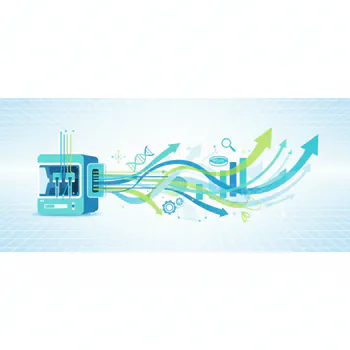
Market Trends & Growth Drivers
Benefits & Advantages
Businesses and researchers leveraging a Flow Cytometry System enjoy multiple advantages:
- High-throughput analysis: Ability to process thousands of cells per second accelerates data collection and decision-making.
- Multiparametric capability: Simultaneous measurement of multiple cellular markers offers a comprehensive profile of cell populations.
- Quantitative and qualitative data: Provides precise numerical data alongside functional insights.
- Versatility: Applicable across clinical, research, and industrial settings.
- Cost-effectiveness: Despite initial investment, improved accuracy and automation reduce long-term operational costs and time-to-result.
Furthermore, the competitive edge gained through advanced diagnostics or faster R&D cycles can significantly improve ROI. For example, flow cytometry-driven immunophenotyping reduces diagnostic ambiguity, enabling timely and targeted treatments.
Challenges & Future Outlook
Despite its strengths, the Flow Cytometry System faces several challenges:
- Complexity of data analysis: High-dimensional data require skilled operators and sophisticated software, posing a barrier for some labs.
- Cost and maintenance: High upfront costs and need for regular calibration can limit accessibility.
- Standardization issues: Variability in protocols and reagents hampers reproducibility across studies.
Innovations aimed at overcoming these hurdles include AI-powered automated gating, development of portable and user-friendly instruments, and standardized reagent kits. The future of flow cytometry is promising, with trends moving towards integration with other omics technologies and real-time in vivo cell analysis.
Experts predict that the rise of spectral and imaging flow cytometry will further enhance resolution and multiplexing capabilities, expanding applications in personalized medicine and advanced therapeutics.
Conclusion
The Flow Cytometry System stands out as a transformative technology that has reshaped cellular analysis across diagnostics, research, and industry. Its ability to provide rapid, detailed, and multiparametric data drives innovation in disease understanding, drug development, and quality control.
As market demand grows and technological advancements address current challenges, adopting flow cytometry systems offers significant strategic advantages. Businesses and researchers are encouraged to invest in up-to-date systems and training to fully harness their potential.
Looking ahead, the convergence of flow cytometry with AI and multi-omics approaches promises to unlock deeper biological insights and pave the way for breakthroughs in precision medicine and beyond.
Need More Details on Market Players and Competitors?