
High Performance Sintered NdFeB Permanent Magnet Materials: Key Insights & Trends
Explore high performance sintered NdFeB permanent magnet materials, their applications, market trends, benefits, challenges, and future outlook in technology...
Introduction
In today’s rapidly evolving technological landscape, the demand for powerful and efficient magnetic materials is soaring. Among these, High Performance Sintered NdFeB Permanent Magnet Materials stand out as pivotal components driving innovation across multiple industries — from electric vehicles to renewable energy systems.
This article explores the fundamentals, applications, market trends, and future outlook of these advanced magnets, providing valuable insights into why they are essential for modern technology and how they contribute to shaping a sustainable, high-performance future.
Technology/Concept Overview
High Performance Sintered NdFeB Permanent Magnet Materials refer to neodymium-iron-boron (NdFeB) magnets produced using a sintering process that enhances their magnetic strength and durability. These magnets are known for their exceptional magnetic properties, including high remanence, coercivity, and energy product.
At their core, NdFeB magnets are composed of neodymium (Nd), iron (Fe), and boron (B), with additional elements like dysprosium and praseodymium often added to improve performance at elevated temperatures. The sintering process involves compacting powdered alloys at high temperatures below their melting point, which enhances the crystal structure and magnetic alignment.
This process differentiates sintered NdFeB magnets from bonded or injection-molded variants, offering superior magnetic strength and thermal stability — crucial factors for high-demand applications.
Industry Applications & Use Cases
The versatile nature of High Performance Sintered NdFeB Permanent Magnet Materials allows them to power a wide range of applications:
- Electric Vehicles (EVs): EV motors rely heavily on these magnets for their high magnetic flux density, which improves motor efficiency and power output. Tesla, for example, has incorporated NdFeB magnets to enhance battery life and driving range.
- Wind Turbines: Permanent magnet synchronous generators use these magnets to efficiently convert mechanical wind energy into electrical energy, enabling greener power generation.
- Consumer Electronics: Devices such as smartphones, headphones, and hard drives leverage NdFeB magnets for compact size and high magnetic performance.
- Industrial Automation: Robots and precision machinery utilize these magnets for reliable motion control and positioning.
Several case studies demonstrate the impact of these magnets. For instance, a leading EV manufacturer reported a 15% increase in motor efficiency after switching to high performance sintered NdFeB magnets enhanced with dysprosium, highlighting their critical role in advancing electric mobility.
Market Trends & Growth Drivers
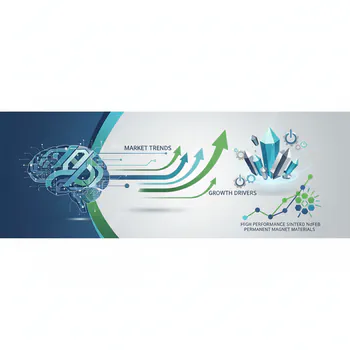
The market for High Performance Sintered NdFeB Permanent Magnet Materials is projected to grow robustly, driven by rising demand in renewable energy and the automotive sector. According to a recent report by Grand View Research, the global NdFeB magnet market is expected to reach USD 13.2 billion by 2028, growing at a CAGR of 10.5%.
Key growth drivers include:
- Electrification of Transportation: Increasing adoption of electric vehicles boosts demand for powerful magnets to improve motor efficiency and reduce size.
- Renewable Energy Expansion: Wind power and other green technologies depend on reliable magnet materials to enhance generator performance.
- Technological Advancements: Innovations in sintering techniques and alloy compositions are improving magnet performance and manufacturing efficiency.
- Miniaturization: Consumer electronics require smaller yet more powerful magnets, fueling demand for high-performance variants.
Additionally, geopolitical factors and supply chain dynamics around rare earth elements like neodymium impact market availability and pricing, creating opportunities for recycling and alternative sourcing advancements.
Market Trends & Growth Drivers
Benefits & Advantages
High Performance Sintered NdFeB Permanent Magnet Materials offer numerous advantages that make them the preferred choice for critical applications:
- Exceptional Magnetic Strength: Their high maximum energy product allows for smaller, lighter magnets without compromising performance.
- Thermal Stability: Enhanced formulations maintain magnetic properties at higher temperatures, crucial for automotive and industrial uses.
- Durability: Sintering improves mechanical strength and corrosion resistance, extending magnet lifespan.
- Cost-Effectiveness: Despite higher raw material costs, the efficiency gains and size reduction translate to overall better ROI.
These benefits translate into competitive advantages such as improved device reliability, extended operational life, and reduced energy consumption — critical factors for businesses aiming to enhance product performance and sustainability.
Challenges & Future Outlook
Despite their many benefits, High Performance Sintered NdFeB Permanent Magnet Materials face several challenges:
- Supply Constraints: Dependence on rare earth elements, primarily mined in limited regions, causes supply risks and price volatility.
- Temperature Limitations: Although improved, thermal degradation remains a concern for extreme environments.
- Environmental Impact: Mining and processing rare earth metals pose ecological challenges.
Addressing these challenges, research focuses on developing low-dysprosium or dysprosium-free magnets, enhancing recycling technologies, and advancing sintering processes to reduce defects and improve uniformity.
Looking ahead, the integration of machine learning and AI in magnet design, combined with sustainable sourcing efforts, promises to drive further performance leaps and market growth. Industry experts anticipate that by 2030, these magnets will be integral to next-generation applications like autonomous vehicles, smart grids, and advanced robotics.
Conclusion
High Performance Sintered NdFeB Permanent Magnet Materials are indispensable to modern technology, offering unmatched magnetic strength and versatility. Their pivotal role in electrification, renewable energy, and consumer electronics highlights their broad impact across industries.
As market demand escalates, innovations in material science and sustainable supply chains will be crucial to overcoming current challenges and unlocking new opportunities. Businesses and engineers investing in these magnets today are positioning themselves at the forefront of a high-performance, energy-efficient future.
In summary, understanding the capabilities and trends of these magnets empowers decision-makers to harness their full potential, driving innovation and competitive advantage in an increasingly magnet-driven world.
Need More Details on Market Players and Competitors?