
Motorized Linear Actuators: Revolutionizing Automation & Precision
Discover how motorized linear actuators drive precision and automation across industries. Explore technology, applications, market trends, benefits, and futu...
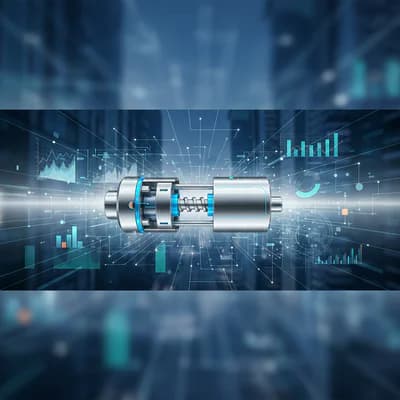
Introduction
In today’s fast-paced industrial landscape, precision and automation are more critical than ever. Motorized linear actuators have emerged as essential components in a wide array of applications, offering accurate and controlled linear motion to streamline operations and enhance productivity.
From manufacturing floors to medical equipment, these devices are driving innovations that improve efficiency and performance. This article delves into the technology behind motorized linear actuators, explores their diverse applications, highlights current market trends, and examines the benefits, challenges, and future outlook of this dynamic technology.
Technology Overview: Understanding Motorized Linear Actuators
Motorized linear actuators are electromechanical devices that convert rotational motion into precise linear movement. Unlike manual actuators, they use an electric motor—commonly a stepper or servo motor—to automate the linear displacement process, providing high accuracy, repeatability, and control.
At their core, these actuators consist of several key components: a motor, a lead screw or ball screw mechanism, a guide system, and a feedback sensor (such as an encoder). The motor drives the screw, which translates rotational motion into linear travel. Feedback sensors enable closed-loop control, ensuring the actuator reaches the desired position with minimal error.
Motorized linear actuators can be classified based on their drive mechanism, including ball screw, lead screw, belt-driven, or rack and pinion designs. Each type offers different trade-offs in terms of speed, load capacity, precision, and maintenance requirements.
Industry Applications & Use Cases
The versatility of motorized linear actuators makes them indispensable across various industries:
- Manufacturing and Automation: Used extensively in assembly lines, CNC machines, and robotic arms, these actuators enable precise positioning and handling of parts, enhancing throughput and quality control.
- Medical Devices: In medical imaging equipment, hospital beds, and surgical robots, motorized linear actuators provide smooth, controlled movements essential for patient safety and procedural accuracy.
- Aerospace and Defense: Actuators control wing flaps, landing gear systems, and other critical components, where reliability and precision are paramount.
- Renewable Energy: Solar panel tracking systems rely on motorized linear actuators to optimize the angle of panels for maximum sunlight exposure.
- Automotive: Electric vehicle systems use these actuators for adjustable seating, throttle control, and headlight positioning.
For example, a leading semiconductor manufacturer integrated motorized linear actuators into their wafer handling robots, resulting in a 20% increase in precision and a significant reduction in downtime. Similarly, a hospital upgraded its patient beds with actuators, improving patient comfort and caregiver efficiency.
Market Trends & Growth Drivers
The global market for motorized linear actuators is experiencing robust growth, driven by increasing automation adoption and demand for precision engineering. According to recent industry reports, the market is projected to grow at a CAGR of over 7% through 2028.
Key drivers behind this expansion include:
- Industry 4.0 and Smart Manufacturing: The push towards connected, intelligent factories fuels demand for actuators that integrate seamlessly with IoT and control systems.
- Rising Automation in Healthcare: Growing use of robotics and automated equipment in medical applications boosts actuator deployment.
- Energy Efficiency Initiatives: Actuators enable precise control in HVAC, solar tracking, and other systems, contributing to sustainability goals.
- Technological Advancements: Innovations such as brushless motors, advanced materials, and smart sensors enhance actuator performance and reliability.
Furthermore, the miniaturization trend is expanding application possibilities in compact devices, while customization options allow manufacturers to cater to niche requirements.

Market Trends & Growth Drivers
Benefits & Advantages of Motorized Linear Actuators
Implementing motorized linear actuators brings numerous benefits to businesses and end-users alike:
- Precision and Accuracy: High positional accuracy ensures repeatable and reliable operations, critical for quality-sensitive applications.
- Automation and Efficiency: Automated linear motion reduces manual labor, accelerates workflows, and lowers operational costs.
- Compact and Flexible Design: Actuators can fit into tight spaces and be customized to specific stroke lengths and load capacities.
- Energy Savings: Electric actuators consume less energy compared to hydraulic or pneumatic alternatives and generate less noise.
- Improved Safety: Controlled movements reduce risk of accidents in industrial and medical environments.
- High ROI: By enhancing productivity and reducing downtime, motorized linear actuators offer strong return on investment.
From a competitive standpoint, companies leveraging these actuators can accelerate product development cycles and achieve superior operational precision, gaining a significant edge in their markets.
Challenges & Future Outlook
Despite their advantages, motorized linear actuators face certain challenges:
- Initial Cost: High-precision actuators can require significant upfront investment, which may be prohibitive for small enterprises.
- Maintenance and Reliability: Mechanical wear and environmental factors can affect longevity and performance, necessitating robust design and maintenance schedules.
- Integration Complexity: Incorporating actuators into existing systems requires careful planning and control system compatibility.
However, ongoing innovations are addressing these hurdles. Developments in advanced materials improve durability, while smart actuator technology with embedded sensors enables predictive maintenance and real-time adjustments. Additionally, advances in AI-driven control algorithms are enhancing actuator precision and adaptability.
Looking ahead, the future of motorized linear actuators is promising. Increasing adoption in emerging fields such as autonomous robotics, wearable medical devices, and precision agriculture is expected. Moreover, as Industry 4.0 matures, actuators will become more interconnected and intelligent, driving further efficiency gains.
Conclusion
In summary, motorized linear actuators are transforming industries by delivering precise, reliable, and automated linear motion critical for modern applications. Their widespread use—from manufacturing and healthcare to renewable energy—underscores their versatility and value.
Businesses aiming to improve efficiency, accuracy, and safety should consider integrating motorized linear actuators into their systems. As technology advances, these actuators will continue to evolve, unlocking new opportunities and driving innovation across sectors.
Embracing motorized linear actuators today sets the stage for a future of smarter, more efficient automated solutions.
Need More Details on Market Players and Competitors?