
Plant Growth Test Chambers: Advancing Agricultural Research & Innovation
Discover how plant growth test chambers revolutionize agricultural research with precise environmental control, driving innovation and sustainable crop devel...

Introduction
In the rapidly evolving world of agricultural science and biotechnology, Plant Growth Test Chambers have emerged as indispensable tools for controlled environment research. These specialized chambers allow scientists, agronomists, and researchers to simulate precise environmental conditions, enabling detailed study of plant growth, development, and responses to various stimuli.
Understanding how plants react to different factors such as temperature, humidity, light intensity, and CO2 levels is crucial for improving crop yields, developing resilient plant varieties, and addressing global food security challenges. This article dives deep into the concept of plant growth test chambers, their industry applications, market trends, benefits, and future outlook.
Technology and Concept Overview
Plant Growth Test Chambers are advanced laboratory equipment designed to replicate and control environmental variables for plant cultivation and experimentation. These chambers provide a tightly regulated environment where parameters such as temperature, humidity, light spectrum and intensity, photoperiod, and gas concentrations can be precisely adjusted.
Key components of these chambers include:
- Environmental Control Systems: Technology that maintains stable temperature and humidity levels.
- Lighting Modules: LED or fluorescent lights that replicate sunlight with customizable intensities and wavelengths.
- Air Circulation and CO2 Regulation: Ensures optimal gas exchange and simulates atmospheric conditions.
- Monitoring and Data Logging: Sensors and software to continuously track environmental variables and plant growth metrics.
By managing these conditions, researchers can study physiological responses, test genetic variations, and optimize growth protocols without the unpredictability often found in outdoor environments.
Industry Applications & Use Cases
The applications of plant growth test chambers span numerous sectors including agriculture, pharmaceuticals, environmental science, and academia.
1. Agricultural Research: Breeders use these chambers to test crop varieties under stress conditions such as drought, salinity, or extreme temperatures. For example, a major seed company employed growth chambers to develop heat-tolerant wheat varieties, resulting in a 15% yield increase in arid regions.
2. Pharmaceutical Research: Medicinal plants grown in controlled chambers help in producing consistent bioactive compounds for drug development. Controlled environments also allow for the study of plant pathogen interactions to develop disease-resistant strains.
3. Environmental Studies: Researchers simulate future climate scenarios to evaluate plant adaptability to changing ecosystems, aiding conservation efforts.
4. Educational Institutions: Universities and research centers utilize these chambers to train students and conduct experiments with repeatable and accurate results.
Market Trends & Growth Drivers
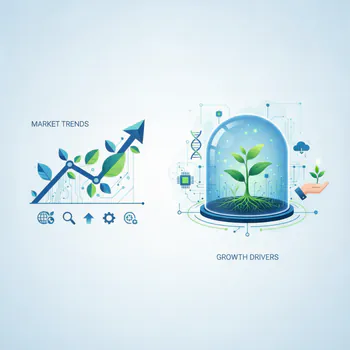
The global market for plant growth test chambers is growing steadily, driven by increasing investments in agricultural biotechnology and the rising need for sustainable farming methods. According to recent industry reports, the market is expected to expand at a CAGR of around 6% over the next five years.
Key factors fueling this growth include:
- Rising Demand for Food Security: As the global population approaches 9.8 billion by 2050, optimizing crop production becomes essential.
- Technological Advancements: Integration of IoT and AI in growth chambers enables real-time data analysis and automated control, improving research accuracy.
- Climate Change Research: Governments and organizations are investing in facilities to study the impact of environmental stressors on crops.
- Pharmaceutical and Nutraceutical Industries: Growing interest in plant-derived compounds is increasing the use of controlled environment agriculture.
Moreover, the rise of vertical farming and indoor agriculture has spurred the development of compact, energy-efficient plant growth test chambers suited for urban settings.
Market Trends & Growth Drivers
Benefits & Advantages
The advantages of employing plant growth test chambers in research and production are multifaceted:
- Precision and Consistency: Controlled environments eliminate variability caused by external weather conditions, ensuring reproducibility of experiments.
- Accelerated Research Cycles: Researchers can simulate multiple growth cycles annually, speeding up breeding and testing processes.
- Enhanced Crop Development: Stress testing under controlled conditions enables the development of robust, high-yielding crops.
- Resource Efficiency: These chambers optimize water and nutrient use, supporting sustainable agricultural practices.
- Data-Driven Insights: Integration with monitoring systems facilitates comprehensive data collection, leading to better decision-making.
For businesses, the use of plant growth test chambers translates into reduced R&D costs, improved product offerings, and a competitive edge in the fast-evolving agri-tech market.
Challenges & Future Outlook
Despite their benefits, plant growth test chambers face certain challenges:
- High Initial Investment: Advanced chambers with integrated technologies can be costly, limiting accessibility for smaller institutions.
- Energy Consumption: Maintaining controlled environments, especially lighting and temperature regulation, demands significant energy.
- Scale Limitations: Chambers typically accommodate limited plant volumes, which may not fully replicate field conditions.
To overcome these, manufacturers are innovating towards energy-efficient designs, modular systems for scalability, and AI-powered automation to optimize resource use.
Looking ahead, the convergence of digital agriculture with plant growth test chambers will transform how research is conducted. Emerging trends include:
- Smart Chambers: Equipped with machine learning algorithms to autonomously adjust conditions based on plant feedback.
- Integration with Genomics: Linking controlled environment data with genetic analysis for precision breeding.
- Remote Monitoring and Control: Cloud-based platforms allowing researchers to manage chambers remotely.
These advancements promise to make plant growth test chambers more accessible, efficient, and impactful in addressing global agricultural challenges.
Conclusion
Plant Growth Test Chambers stand at the forefront of agricultural innovation, offering unparalleled control and insights into plant development. From accelerating crop breeding programs to enabling cutting-edge pharmaceutical research, their role is pivotal in driving sustainable and resilient agriculture.
As market demand grows and technologies evolve, businesses and research institutions investing in these chambers will unlock new opportunities for enhanced productivity and scientific breakthroughs. Staying abreast of trends like AI integration and energy-efficient designs will be key to maximizing ROI and impact.
Ultimately, embracing this technology equips us to meet the pressing challenges of food security and climate change with informed, data-driven solutions—paving the way for a greener, more sustainable future.
Need More Details on Market Players and Competitors?