Train Control Management System: Revolutionizing Rail Operations
Discover how Train Control Management Systems enhance rail safety, efficiency, and operations. Explore market trends, benefits, use cases, and future outlook.
Introduction
In today’s fast-paced world, efficient and safe railway operations are more critical than ever. A Train Control Management System (TCMS) plays a pivotal role in transforming how rail networks are managed, ensuring smoother journeys, improved safety, and enhanced operational efficiency. Whether you're a rail industry professional, technology enthusiast, or simply curious about modern transportation, understanding TCMS is essential in grasping the future of rail travel.
This article delves into the fundamentals of Train Control Management Systems, explores their real-world applications, highlights market trends driving their adoption, discusses key benefits, and examines the challenges and future outlook for this vital technology.
Understanding Train Control Management System
A Train Control Management System is an integrated technology framework designed to monitor, control, and optimize the functions of a train. At its core, TCMS acts as the brain of the train, managing critical subsystems such as propulsion, braking, door operations, diagnostics, and passenger information systems.
Key components and concepts related to TCMS include:
- Central Control Unit: The main processing hub that receives inputs from sensors and operator commands, coordinating various onboard systems.
- Communication Networks: Data buses like CAN (Controller Area Network) or Ethernet enable seamless information exchange between train components.
- Diagnostics and Fault Management: Continuous monitoring detects faults early, allowing predictive maintenance and minimizing downtime.
- Interfacing with Wayside Systems: TCMS integrates with trackside control centers to ensure synchronization and safety.
Originating from advancements in embedded systems and digital communication, TCMS has evolved to support increasingly complex rail operations, adapting to the demands of high-speed, urban, and freight trains alike.
Industry Applications & Use Cases
The versatility of the Train Control Management System is evident in its widespread adoption across various rail sectors. Here are some real-world examples:
- High-Speed Rail: The Shinkansen network in Japan employs advanced TCMS platforms to coordinate train speeds, manage braking systems with precision, and ensure optimal energy consumption, resulting in punctual and safe operations.
- Urban Metro Systems: Cities like Paris and Singapore utilize TCMS to manage frequent stop-and-go cycles, automate door operations, and provide real-time passenger information, enhancing commuter experience.
- Freight Rail: In the freight sector, TCMS helps monitor heavy load traction, optimize train composition, and maintain safety during long-haul journeys.
- Case Study – Alstom’s Urbalis System: Alstom’s Urbalis TCMS technology has been implemented in multiple metro systems worldwide, providing automated train control that increases line capacity by up to 30%.
These applications demonstrate how TCMS solutions tailor functionality to meet diverse operational needs while prioritizing safety and efficiency.
Market Trends & Growth Drivers
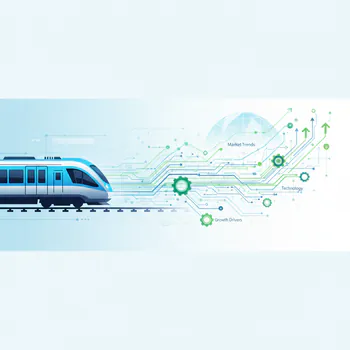
The global market for Train Control Management Systems is witnessing robust growth, fueled by several compelling factors:
- Rising Demand for Rail Modernization: Governments worldwide are investing heavily in upgrading aging rail infrastructure with intelligent control systems to improve service quality.
- Technological Advancements: Integration of IoT, AI, and big data analytics into TCMS enables smarter predictive maintenance and operational insights.
- Safety Regulations: Stricter safety standards and regulations are compelling rail operators to adopt advanced control systems.
- Urbanization and Commuter Growth: Increasing urban populations drive the need for efficient mass transit systems managed by sophisticated TCMS solutions.
According to MarketsandMarkets, the Train Control and Management System market is projected to grow at a CAGR of over 7% through 2028, reflecting strong adoption across Asia-Pacific, Europe, and North America.
Market Trends & Growth Drivers
Benefits & Advantages of Train Control Management Systems
Incorporating a Train Control Management System offers numerous advantages to rail operators and passengers alike:
- Enhanced Safety: Continuous monitoring and automated controls reduce human error, minimizing accidents.
- Operational Efficiency: Optimized propulsion and braking lead to energy savings and reduced wear on components.
- Improved Passenger Experience: Reliable door operations, accurate scheduling, and clear passenger information increase satisfaction.
- Reduced Downtime: Early fault detection enables predictive maintenance, decreasing delays.
- Scalability: Modular TCMS architectures allow easy upgrades and customization to evolving needs.
These benefits translate into a strong return on investment (ROI), making TCMS an indispensable asset for modern rail operations.
Challenges & Future Outlook
Despite its advantages, implementing Train Control Management Systems is not without challenges:
- Integration Complexity: Retrofitting legacy trains with modern TCMS can be technically demanding and costly.
- Cybersecurity Risks: Increased connectivity opens potential vulnerabilities that require robust security protocols.
- Standardization Issues: Lack of universally accepted standards can hinder interoperability between systems from different vendors.
Looking ahead, ongoing innovations promise to address these challenges. Artificial intelligence and machine learning are being integrated to enhance autonomous decision-making within TCMS. Additionally, 5G and edge computing are set to improve communication reliability and latency.
Experts anticipate that by 2030, next-generation TCMS will support fully autonomous train operations with zero on-board personnel in some applications, revolutionizing rail transport with unprecedented efficiency and safety.
Conclusion
The Train Control Management System stands at the forefront of railway innovation, delivering transformative benefits in safety, efficiency, and passenger experience. From high-speed rail to urban metros, its adoption is accelerating, powered by technological advancements and growing market demand.
For rail operators, investing in TCMS means future-proofing their fleets and staying competitive in an evolving transportation landscape. As challenges like system integration and cybersecurity are overcome, the future of train control promises smarter, more connected, and increasingly autonomous railways.
Embracing this technology today paves the way for safer, greener, and more reliable rail journeys tomorrow.
Need More Details on Market Players and Competitors?