
Unlocking Solar Power: The Rise of Perovskite-Silicon Tandem Cells
Discover how perovskite-silicon tandem cells are revolutionizing solar energy with higher efficiency, real-world applications, market trends, and future outl...

Introduction
Solar energy has rapidly evolved as one of the most promising renewable energy sources, driving the global transition toward sustainable power. Among the latest breakthroughs, the perovskite-silicon tandem cell technology stands out as a game-changer in photovoltaic efficiency and cost-effectiveness. This innovative solar cell architecture combines two materials to capture more sunlight and convert it into electricity more efficiently than traditional silicon cells alone.
In this article, we will explore the fundamentals of perovskite-silicon tandem cells, their real-world applications, the market trends fueling their growth, the benefits they offer, and the challenges they face before reaching widespread adoption. Whether you’re a business leader, technology enthusiast, or industry professional, this comprehensive guide will provide valuable insights into this cutting-edge solar technology.
Technology Overview: Understanding Perovskite-Silicon Tandem Cells
The perovskite-silicon tandem cell is a layered solar cell design that stacks a perovskite solar cell atop a traditional silicon solar cell. This approach leverages the complementary absorption spectra of each material, allowing the tandem cell to harness a broader range of the solar spectrum.
Perovskite refers to a class of materials with a unique crystal structure, typically composed of organic-inorganic hybrid compounds. These materials have garnered significant attention due to their exceptional light-absorption properties, ease of fabrication, and rapidly improving efficiency rates. On the other hand, silicon solar cells have been the backbone of the photovoltaic industry for decades, prized for their stability and mature manufacturing processes.
By stacking the two, the perovskite layer captures high-energy photons (blue and green light), while the silicon layer absorbs lower-energy photons (red and infrared light). This tandem design surpasses the theoretical efficiency limit of single-junction silicon cells, offering potential efficiencies exceeding 30%, compared to the typical 20-22% for standalone silicon cells.
Industry Applications & Use Cases
The potential applications of perovskite-silicon tandem cells span multiple sectors, primarily centered on solar energy generation for residential, commercial, and utility-scale installations.
- Residential solar panels: Emerging manufacturers are integrating tandem cells into rooftop solar solutions to provide homeowners with higher energy yields without expanding panel footprints.
- Commercial solar farms: Large-scale solar farms can benefit from the improved power density and efficiency, leading to greater energy output and faster return on investment.
- Building-integrated photovoltaics (BIPV): Perovskite-silicon tandems offer flexible and lightweight options that can be embedded into windows and facades, enabling energy production directly from building surfaces.
One notable success story is Oxford PV, a pioneering company that has developed commercially viable tandem solar cells and partnered with major solar manufacturers to scale production. Their technology has demonstrated stable efficiencies above 29% in pilot projects, underscoring the commercial promise of this approach.
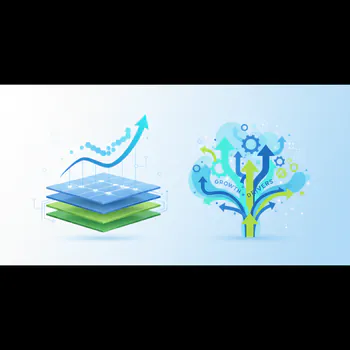
Market Trends & Growth Drivers
The market for perovskite-silicon tandem cells is poised for rapid expansion, driven by the growing global emphasis on renewable energy and decarbonization goals. According to a report by ResearchAndMarkets, the tandem solar cell market is projected to grow at a CAGR exceeding 25% over the next decade.
Several factors are fueling this growth:
- Rising efficiency demands: As electricity demands increase and solar penetration deepens, higher-efficiency cells help maximize energy harvest per square meter.
- Declining costs: Advances in perovskite material synthesis and scalable manufacturing methods are reducing production expenses.
- Government incentives: Policies and subsidies targeting clean technologies encourage investment in next-generation photovoltaics.
- Technological maturity: Improvements in stability and durability of perovskite layers help overcome earlier limitations, making tandem cells commercially viable.
Major photovoltaic companies and research institutions continue to invest heavily in tandem cell technology, signaling robust future adoption across various markets.
Market Trends & Growth Drivers
Benefits & Advantages of Perovskite-Silicon Tandem Cells
The advantages of perovskite-silicon tandem cells extend beyond just higher efficiency. Key benefits include:
- Enhanced energy conversion: Tandem cells break the Shockley-Queisser limit for single-junction cells, converting more sunlight into electricity.
- Lower levelized cost of electricity (LCOE): By producing more power per unit area, tandem cells reduce installation and balance-of-system costs.
- Compatibility with existing infrastructure: Tandem technologies can be integrated into current silicon solar manufacturing lines, easing adoption barriers.
- Lightweight and flexible designs: Perovskite layers can be fabricated on flexible substrates, enabling novel form factors for solar solutions.
- Potential for rapid scaling: Solution-based processes for perovskite films allow faster and less energy-intensive production compared to traditional silicon wafer fabrication.
Together, these benefits translate into compelling value propositions for businesses aiming to improve sustainability while optimizing return on investment.
Challenges & Future Outlook
Despite the exciting prospects, several challenges remain in the widespread commercialization of perovskite-silicon tandem cells:
- Stability and durability: Perovskite materials are sensitive to moisture, heat, and UV exposure, which can degrade performance over time.
- Scaling manufacturing: While lab efficiencies are impressive, transferring these results to large-scale production requires overcoming uniformity and quality control issues.
- Material toxicity concerns: Some perovskite formulations contain lead, raising environmental and health considerations that must be addressed.
Ongoing research focuses on developing more stable perovskite compositions, encapsulation techniques, and lead-free alternatives. Industry collaborations are also working to standardize testing and certification protocols to ensure reliability.
Looking ahead, experts predict that perovskite-silicon tandem cells could become mainstream within the next 5-10 years, substantially boosting the efficiency and affordability of solar power worldwide. Innovations such as flexible tandem modules and integration with energy storage systems will further enhance their appeal.
Conclusion
The rise of perovskite-silicon tandem cells marks a significant leap forward in solar technology, offering a highly efficient and cost-effective path to harnessing the sun’s energy. By combining the strengths of perovskite and silicon materials, this tandem approach promises to redefine photovoltaic performance, enabling cleaner and more sustainable energy solutions globally.
Businesses and policymakers should closely monitor advancements in this field to capitalize on emerging opportunities. As challenges around durability and manufacturing scale are addressed, perovskite-silicon tandem cells are set to play a pivotal role in the renewable energy landscape, powering a greener future with greater efficiency.
Need More Details on Market Players and Competitors?